
In celebration of International Human-Animal Bond Day • 8 November 2026

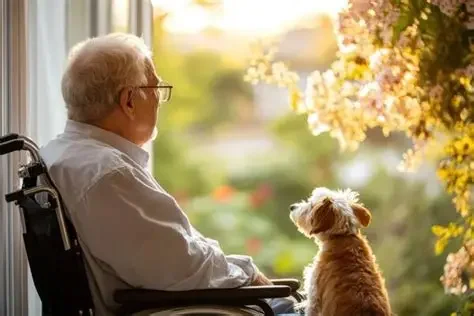
Keeping people and their pets together is important because their bond is built on daily companionship, trust, and care. A pet can bring comfort, routine, and a sense of home through periods of change. For someone moving from independent living to a setting where they need more support, that familiar presence can ease loneliness and help make an unfamiliar place feel safer. Housing changes can put this bond at risk. Older adults, people with disabilities, and others who need dependent living may face limited options if a residence does not welcome pets. People searching for pet-friendly rental housing can face the same problem: a suitable home may be harder to find when landlords restrict animals. Separating someone from a pet can add grief and stress to an already difficult transition and may make it harder to settle into new housing.
The Society for Companion Animal Studies (SCAS) is relaunching two free toolkits to help people keep their pets when they receive care at home or move into a care home.
The toolkits respond to situations in which older or incapacitated people may struggle to care for a pet, or face separation when they need more support. They are designed to help owners, families, care providers and care homes make informed plans that protect the wellbeing of people and animals and support responsible pet ownership for longer.
Practical guidance for home care and care homes
The Pets at Home Toolkit supports people with pets who receive home care. SCAS funded the English adaptation of the SAFEpet@home toolkit, first developed in the Netherlands. Its five free resources include advice for pet owners, communication guidance for professional caregivers, animal welfare information, a care plan discussion checklist and discussion cards. “Older adults often enjoy talking about their companion animals, but conversations about what would happen to their pets if they could no longer care for them are less common” explained Peter Reiners. “SAFEpet@home encourages these important conversations and helps older adults, their families and care professionals make plans together, so that both people and their pets are supported, now and in the future.”
The SAFEPet@Facility Toolkit supports people who wish to take their pet with them when they move into a care home. It provides a framework to identify risks to residents and animals, assess their impact and consider ways to reduce them. Case studies show the framework in practice, alongside guidance and further resources. “Entering a care home is a distressing time for people involving many losses, and usually people are forced to relinquish loved pets at this very sad time in their lives”, says Dr. Janette Young. SAFE (Safe Animal Friendly Environments) is a risk management tool that enables friends, family and staff to assess the potential risks that the most common species of pets can pose, identifying responses that reduce such risks to acceptable levels so that both people and animals are able to safely live together in this (commonly final) stage of life.”
The Pets at Home Toolkit was supported by a 2024 SCAS grant to Peter Reniers of the Instituut voor Antrozoologie in the Netherlands. SCAS funded the development of the SAFEPet@Facility Toolkit through a 2020 grant to Janette Young of the University of South Australia

Training and resources
SCAS plans to provide two free webinars to help users apply the toolkits effectively. The toolkits are available to download at no cost from the SCAS website at https://www.scas.org.uk/downloads
Human Animal Bond Day was first launched in 2021. Dr. Patrick Flynn, president of the Human Animal Bond Association says, “The bond we have with companion animals and the natural world is indeed international. We thought we need to step it up and support awareness, from Beagles to bats we have a bond.”
HABA also supports increasing choices for victims of domestic violence to flee with all family members including pets.
In a recent podcast, Steve Dale brings an international focus to the International Human-Animal Bond Day in his interview with two vets - Dr. Elizabeth Ormerod (UK), Chair of SCAS and Dr. Patrick Flynn (USA), President of HABA – as they discuss the importance of the bond to people and companion animals. Steve Dale is a certified animal behaviour consultant and has reached more pet owners over the past few decades than any other pet journalist in America. He recently gave a SCAS webinar on a new approach to managing dog bites.
For queries, contact info@scas.org.uk
About SCAS
The Society for Companion Animal Studies (SCAS) was established in 1979 to promote the study of human–companion animal interactions and to raise awareness of the vital roles pets play in society. SCAS is the UK’s leading Human–Animal Interaction organisation, funding original research, providing education, encouraging best practice, and shaping policy to support the human–companion animal bond. If you’d like to know more about SCAS and its work to promote the bond between people and pets, visit our website www.scas.org.uk.
About HABA
The Human Animal Bond Association (HABA) is a nonprofit organization dedicated to advancing the understanding and appreciation of the dynamic relationship between people and animals. Through education, advocacy, and collaboration, HABA promotes the positive impact of the human-animal bond on individual and community well-being. The association brings together professionals from veterinary medicine, animal welfare, human health, and related fields to foster interdisciplinary dialogue and support initiatives that strengthen this vital connection. HABA envisions a world where the human-animal bond is universally recognized, respected, and nurtured.